

17 Layered Haircuts for Men with Fine Hair
Dealing with fine hair can feel like fighting an uphill battle every morning. You know that frustrating moment when your haircut looks great at the barbershop, but by the time you get home, it’s already falling flat? I’ve been there too.
After talking to barbers and trying different approaches myself, I’ve learned that the secret isn’t about hiding fine hair—it’s about working with it. Layered cuts can actually be your best friend when you have fine strands. They add movement, create the illusion of thickness, and give you styling options that single-length cuts just can’t match.
1. The Short Textured Crop

This cropped cut keeps things neat while building serious volume where you need it most.
According to The Shave Cave, “The French crop is a timeless short haircut defined by its blunt fringe and textured top. It’s perfect for men looking for a low-maintenance style.”
The layered texture on top creates natural lift, while the contrast with shorter sides makes your hair appear fuller.
Point-cutting techniques give it that slightly messy, lived-in texture that works especially well for fine hair.
Ask your barber to keep the layers choppy but not too aggressive—you want movement without sacrificing what density you have.
2. The Feathered Layer Fade

Soft feathered layers through the top section create incredible movement without weighing fine hair down.
This cut works by having your barber use a feathering technique that removes weight while maintaining length in key areas.
Vagazine explains that “Layering is a cutting technique where hair is cut at different lengths throughout the style. Unlike a blunt cut where all hair ends at the same length, layering creates dimension.”
The feathered approach prevents that heavy, flat look that can plague fine-haired guys. Style it with a lightweight cream to bring out the texture without flattening the layers.
3. The Forward Fringe Crop

With its forward-sweeping fringe and strategic layering, this cut is perfect for covering thinning spots while adding visual thickness.
The layers help disguise any sparse areas by creating natural movement and shadow play that makes your hair look denser.
I learned that this style works particularly well if you have recession at the temples or a high forehead.
The key is having your barber cut the fringe at varying lengths rather than straight across, which gives it that effortless, textured appearance.
A texturizing spray helps enhance the natural movement without adding weight.
4. The Messy Side Part with Texture

This layered approach uses controlled mess and soft layering to create the illusion of fuller hair.
The uneven texture keeps the eye moving, which naturally helps camouflage thinner spots.
According to experts at Victory Barber & Brand, “Keep the hair on top between 3-5 inches. This leaves enough hair to blow-dry and style, but not so much that it weighs the hair down.”
The slightly tousled finish gives fine hair the body it naturally lacks.
Use a dry texture spray rather than heavy products to maintain that airy, voluminous feel.
5. The Brushed-Forward Texture Cut
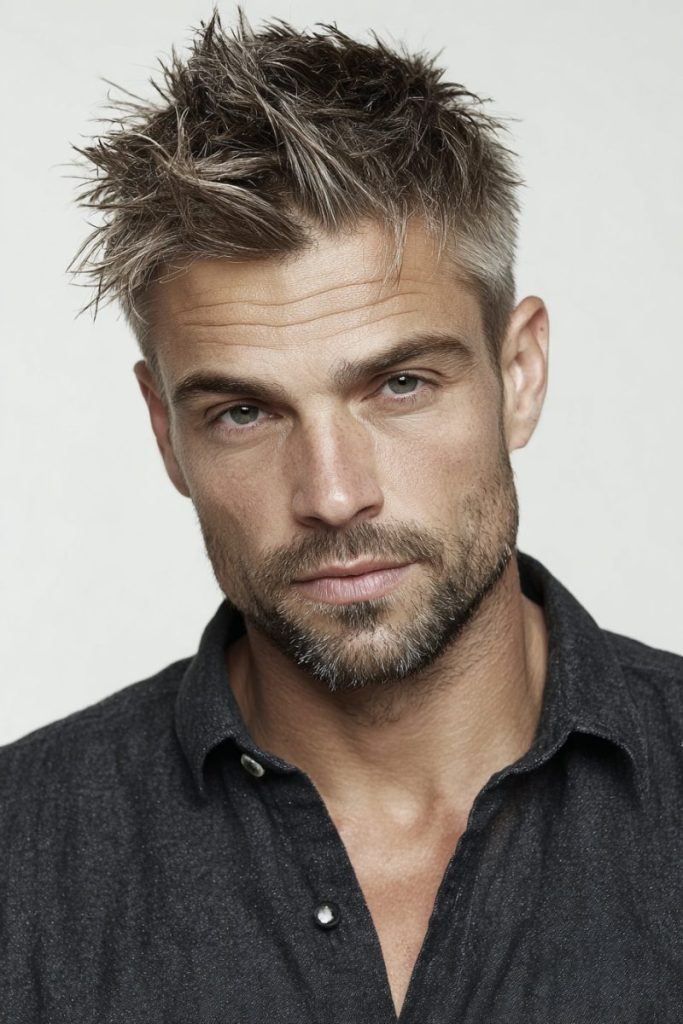
Pushing layered hair forward helps maximize coverage while creating natural-looking fullness.
This technique works because it uses your hair’s natural growth patterns to create volume at the crown and front hairline.
Relentless Grooming notes that “This popular cutting technique, which involves trimming hair at different lengths, removes bulk, builds volume and works well to create separation, shape and flow.”
The forward motion also helps you get more visual impact from less hair. Matte-finish products work best here since they won’t weigh down the fine strands or create that greasy look that makes hair appear even thinner.
6. The Classic Ivy League Plus

This updated version of the traditional Ivy League incorporates subtle layering to prevent that flat, lifeless appearance.
While keeping the clean, professional vibe of the original cut, the added layers give you styling versatility and natural volume.
The layering prevents the top from looking too uniform or heavy, which can be a problem for fine hair in traditional cuts.
You can style this with a side part for work or brush it back loosely for a more casual look.
A lightweight pomade gives just enough hold without the weight that kills volume in fine hair.
7. The Short Pompadour Build

Yes, fine-haired guys can absolutely rock a pompadour when it’s cut with the right layered foundation.
The secret is in having your barber create graduated layers that build height without requiring too much hair density.
Men’s Health explains that fine hair “doesn’t want to do a lot,” says barber Doug Paster. “It’s not buoyant or textured.
It tends to be more limp and flat or straight and smooth.”
That’s exactly why the layered approach works—it creates the structure your hair naturally lacks.
The sides stay short with a fade, making the layered top appear even fuller by contrast.
8. The Textured French Crop Variation

A French crop gets a fine-hair makeover with strategic texturing and layered depth throughout the top section.
This isn’t your standard blunt fringe—instead, the layers create natural movement that prevents the flat, helmet-like appearance that can happen with single-length crops on fine hair.
The textured layers also make styling much easier since they naturally fall into place with minimal product.
This cut works especially well for guys who want something low-maintenance but still polished enough for professional settings.
9. The Long Layer Side Sweep

For guys who still have decent density but want to address the fine texture, longer layers can work beautifully.
This approach maintains length while adding crucial movement and dimension. Esquire advises that “Long and layered,” says Dana Caschetta, stylist at Eufora. “I would recommend it on any natural texture, but be wary on fine hair.”
The key is not going too heavy with the layering—you want subtle graduation that adds movement without removing too much bulk.
The side sweep helps create the illusion of density by stacking the hair in one direction.
10. The Taper Fade with Layered Crown

This cut focuses all the visual weight on top through strategic layering while keeping the sides clean with a gradual taper.
The contrast between the faded sides and textured top creates the illusion that you have much thicker hair than you actually do.
The layered crown section gives you multiple styling options—you can spike it slightly, brush it back, or leave it naturally tousled.
According to hair experts, this versatility is crucial for fine hair since you can adjust your styling based on how your hair is behaving on any given day.
11. The Layered Buzz Plus

Even ultra-short cuts can benefit from layering techniques. This isn’t your standard all-over buzz—instead, barbers use different guard lengths to create subtle graduation and visual interest.
The layered approach prevents that “scalped” look that can be unflattering on guys with fine hair or slight recession.
Multiple clipper guards create soft transitions that give the illusion of natural density variation.
It’s perfect for guys who want the convenience of short hair but don’t want to lose all styling dimension.
12. The Blow-Dried Layer Build

This cut is specifically designed to work with blow-drying techniques that maximize volume in fine hair.
Esquire recommends that you “Familiarize yourself with hair paste, dry shampoo, and a blow dryer. They’re your new best friends.”
The layers are cut to work with round brush techniques that lift the roots and create lasting volume.
The key is having enough length to grab with the brush but not so much that the weight pulls everything down.
This approach requires a bit more daily effort but delivers consistently fuller-looking results.
13. The Textured Faux Hawk Build

A faux hawk relies heavily on layered structure to create that lifted center strip without needing massive amounts of hair.
The layered approach builds height gradually, making it achievable even with finer strands.
The texture prevents the style from looking too rigid or artificial—instead of sharp spikes, you get natural-looking lift and movement.
This cut works especially well for guys who have a defined hairline and want to make the most of their natural growth patterns.
14. The Layered Side Sweep with Temple Detail
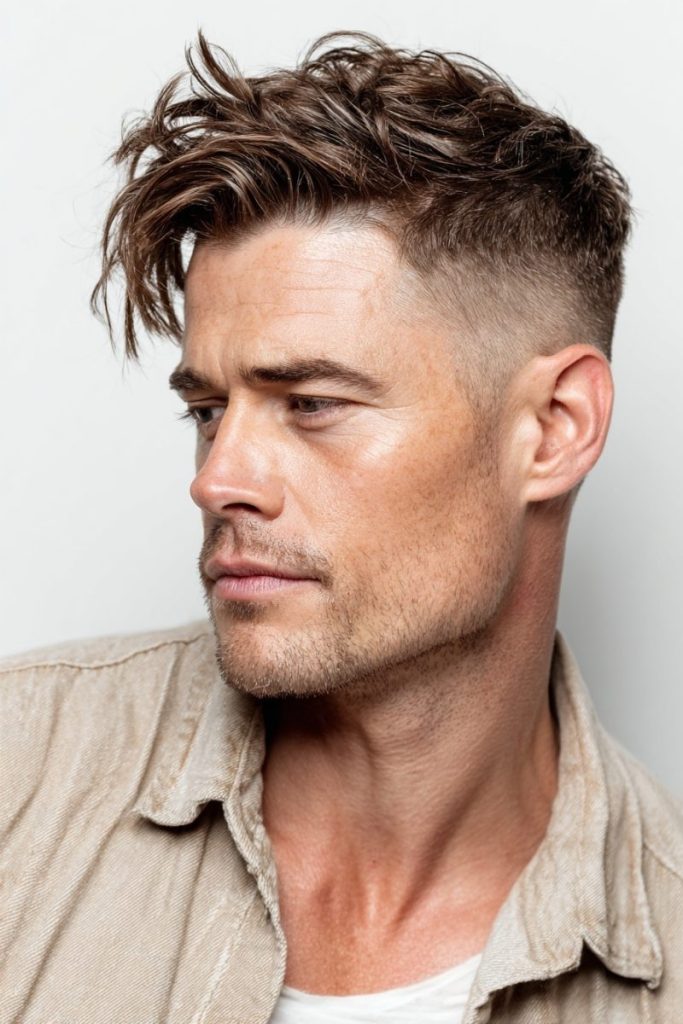
This sophisticated cut combines soft layering on top with precise temple fading for a balanced, modern look.
The layers create movement and texture while the temple fade adds sharp contrast that makes the top appear fuller.
This style works particularly well for professional settings since it maintains clean lines while providing the texture benefits that fine hair needs.
The side-swept styling takes advantage of natural growth patterns to maximize visual impact.
15. The Short Spiky Layer System

Updated spiky styles rely on layered cutting rather than heavy gel to create texture and lift.
The layers provide the foundation for natural-looking spikes that don’t appear stiff or crunchy.
This modern approach to spiky hair works much better for fine strands since it doesn’t rely on products that can weigh hair down.
The key is asking for varied layer lengths that create natural separation and movement.
16. The Side-Parted Layered Quiff

This style takes the classic quiff and makes it accessible for fine hair through strategic layering.
The layers provide the foundation for lift in the front while maintaining enough weight to create the quiff shape.
A clean side part adds structure, while the layered texture prevents the style from falling flat throughout the day.
The combination creates a look that’s both classic and contemporary.
17. The Disconnected Layer Top

A disconnected undercut puts all focus on the layered top section, creating maximum contrast and visual impact.
The dramatic difference between the short sides and textured top makes fine hair appear much thicker than it actually is.
This high-contrast approach works because it concentrates all your hair’s visual weight in one area rather than spreading it thin across the entire head.
Celebrity Examples
Celebrities like Ryan Gosling, Chris Evans, and Michael Fassbender have all worked layered cuts to their advantage despite having naturally fine hair. These guys prove that with the right cut and styling approach, fine hair can look just as impressive as thicker types.
Products That Work
For fine hair, lightweight products are essential. Sea salt sprays add texture without weight, while matte clays provide hold without the heaviness of traditional pomades. Dry shampoos can add grip and volume between washes, and texturizing powders create instant lift at the roots.
Layered cuts aren’t just about following trends—they’re problem-solving tools that help fine hair work with its natural characteristics instead of against them. The right layered cut can transform flat, lifeless hair into something with movement, dimension, and visual weight.
Whether you’re just starting to notice some thinning or you’ve always dealt with fine strands, there’s a layered approach that can work for your specific situation. The key is finding a barber who understands how to layer fine hair properly and being willing to put in a bit of styling effort to maximize the results.
More Ideas:
- 17 Ridiculously Cool MEN’S FRINGE Hairstyles
- 17 Men’s Haircuts for Thinning Hair That Look Fantastic
- 19 STYLISH Men’s Fade Haircuts to Try Now


